
Mercedes-Benz manual transmissions are relatively rare, primarily found in lower-end European models, and often face challenges related to computer integration and mating issues.
Despite their robust design, Mercedes-Benz manual gearboxes can experience issues like refusing to enter gears, or a loose shifter feel, requiring careful attention.
Maintaining the correct transmission fluid level and type is crucial, as incorrect fluid or low levels can lead to various performance problems and potential failures.
Historical Overview of Manual Transmissions in Mercedes-Benz
Historically, Mercedes-Benz offered manual transmissions, particularly in their earlier models and in specific European market vehicles. However, a shift towards automatic transmissions began decades ago, driven by a preference for comfort and convenience among buyers.
The availability of manual options became increasingly limited, largely confined to base-level trims and certain performance-oriented AMG variants, though even these are exceptionally rare. This trend reflects a broader industry move away from manual gearboxes.
Enthusiasts often seek these rarer manual Mercedes-Benz models, appreciating the driver engagement and control they offer, making them highly collectible today.
Rarity of Manual Transmissions in Mercedes-Benz Vehicles
Manual transmissions in Mercedes-Benz vehicles are notably scarce, especially in North American markets. They were predominantly reserved for entry-level models sold in Europe, catering to drivers who preferred a more connected driving experience.
Finding a factory-equipped manual Mercedes, particularly an AMG model, is exceptionally challenging. Online discussions highlight this rarity, with enthusiasts actively searching for these elusive vehicles.
This limited availability contributes to their desirability and often commands a premium price among collectors and driving purists seeking a unique Mercedes-Benz.
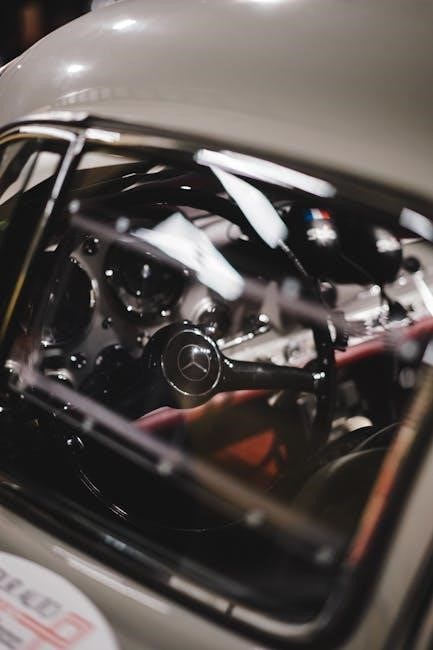
Common Mercedes-Benz Manual Transmission Models
Notable models featuring manual transmissions include the W124 chassis, W202 (C-Class), and W203 (C-Class), though availability varied significantly by region and specific trim level.
W124 Chassis Manual Transmission Options
The W124 chassis offered several manual transmission choices, primarily the Getrag 265/5 and 265/6, depending on the engine variant. These transmissions were known for their durability and precise shifting feel, becoming quite sought after by enthusiasts.
Typically found in the C220, C250, and 230E models, the five-speed Getrag 265/5 provided a sporty driving experience. The six-speed Getrag 265/6 was rarer, appearing in higher-performance versions.
Identifying the specific transmission involves checking for codes on the gearbox casing, crucial for sourcing correct parts during repairs or restoration projects.
W202 (C-Class) Manual Transmission Variants
The W202 C-Class offered a range of manual transmission options, largely dependent on the engine specification. The five-speed Getrag 295 was a common choice, providing a smooth and reliable shifting experience for models like the C180 and C220.
Higher-performance variants, such as the C280, sometimes featured a more robust version of the Getrag 295, designed to handle increased torque. Identifying the exact variant requires checking transmission codes.
These transmissions are generally considered robust, but issues like a loose shifter can arise with age and wear.
W203 (C-Class) Manual Transmission Availability
The W203 C-Class saw a continued, though diminishing, availability of manual transmissions, primarily in European markets. The five-speed manual remained the standard option for base models like the C180 Kompressor and C220 CDI.
However, the take-rate for manuals decreased significantly compared to the W202, with automatic transmissions becoming increasingly popular. Identifying a manual W203 requires verifying the original specification.
Reported issues include difficulty entering 5th, 6th, and reverse gears, often accompanied by a loose shifter feel, suggesting internal wear.

Identifying Mercedes-Benz Manual Transmission Types
Transmission identification relies on Getrag and Mercedes-Benz specific codes, alongside the model year, to determine the exact type and specifications of the manual gearbox.
Decoding these codes is vital for sourcing correct parts and understanding potential compatibility issues during repairs or upgrades.
Getrag Transmission Codes and Identification
Getrag frequently collaborated with Mercedes-Benz, supplying many of their manual transmissions, and their codes are crucial for identification. These codes, typically found stamped on the transmission casing, offer detailed information about the gearbox’s internal gear ratios and construction.
Common examples include codes starting with ‘282’ or ‘295’, each representing a specific series. Deciphering these codes requires referencing Getrag’s technical documentation or specialized online databases. Knowing the code allows for accurate parts sourcing and understanding the transmission’s capabilities.
Proper identification is essential for successful repairs and ensuring compatibility with the vehicle’s engine and drivetrain.
Mercedes-Benz Specific Manual Transmission Codes
Mercedes-Benz also assigns its own codes to manual transmissions, often supplementing the Getrag codes; These internal codes are vital for parts ordering within the Mercedes-Benz system and can differ from the manufacturer’s markings.
These codes are typically found in the vehicle’s service records or on a sticker affixed to the transmission itself. They provide specific details about the transmission’s application within a particular Mercedes-Benz model range.
Understanding both the Getrag and Mercedes-Benz codes is crucial for accurate identification and sourcing the correct replacement parts.
Distinguishing Manual Transmission Models by Year
Mercedes-Benz manual transmission offerings varied significantly depending on the production year and model. Early models, like those from the W124 era, featured different transmission options compared to later C-Class generations (W202, W203).
Generally, newer models saw a decline in manual transmission availability, with automatic transmissions becoming increasingly dominant. Identifying the year of manufacture is therefore essential when determining the specific transmission type.
Vehicle documentation and VIN decoding can help pinpoint the original transmission configuration for a given year.
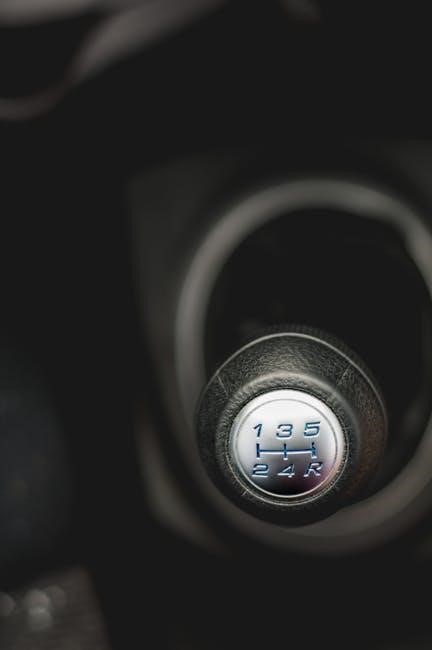
Common Problems with Mercedes-Benz Manual Transmissions
Common issues include difficulty shifting, a loose shifter feel, refusal to enter specific gears (like 5th, 6th, or reverse), and the frustrating symptom of grinding gears.
These problems often stem from low or incorrect transmission fluid, or the notorious 13-pin connector plug O-ring failure.
Difficulty Shifting into Gear
Experiencing trouble getting your Mercedes-Benz manual transmission into gear is a frequently reported problem, often manifesting as resistance or an inability to select a specific gear at all.
This can range from occasional stiffness to a complete refusal to engage, particularly with 5th, 6th, or reverse gears, as noted in user reports.
Potential causes include low or degraded transmission fluid, worn synchronizers, or issues with the clutch components themselves. A loose shifter feel often accompanies this symptom, indicating internal wear or linkage problems.
Proper diagnosis is crucial, as ignoring this issue can lead to further damage and more costly repairs down the line.
Loose Shifter Feel
A common complaint among Mercedes-Benz manual transmission owners is a noticeably loose or sloppy shifter feel. This sensation indicates excessive play within the shift linkage or internal transmission components.
Often, this symptom appears alongside difficulty shifting into specific gears, particularly reverse, 5th, and 6th, suggesting a connected underlying issue.
Worn bushings within the shift linkage are a frequent culprit, but internal wear on synchronizers or the shift forks can also contribute to this problem. Addressing this promptly prevents further deterioration.
Ignoring a loose shifter can lead to missed shifts and potential damage to the transmission.
Refusal to Enter Specific Gears (5th, 6th, Reverse)
A frustrating issue with Mercedes-Benz manual transmissions is the sudden inability to engage certain gears, most commonly 5th, 6th, and reverse. This often presents alongside a loose shifter feel, indicating a related mechanical problem.
Worn synchronizers are a primary suspect, as they facilitate smooth gear engagement; their failure prevents complete mesh. Internal damage to the shift forks can also block gear selection.
A C180 owner reported this exact issue, emphasizing the need for immediate attention to avoid further complications and potential transmission failure.
Grinding Gears
Gear grinding during shifts is a clear sign of trouble within a Mercedes-Benz manual transmission. This harsh noise indicates that the gears aren’t smoothly meshing, often due to worn synchronizers or low/incorrect transmission fluid.
Attempting to force a shift when grinding can cause significant damage to the gear teeth and related components, escalating repair costs. It’s crucial to diagnose the root cause promptly.
Insufficient fluid or the wrong type can exacerbate the problem, hindering the synchronizers’ ability to match gear speeds effectively.
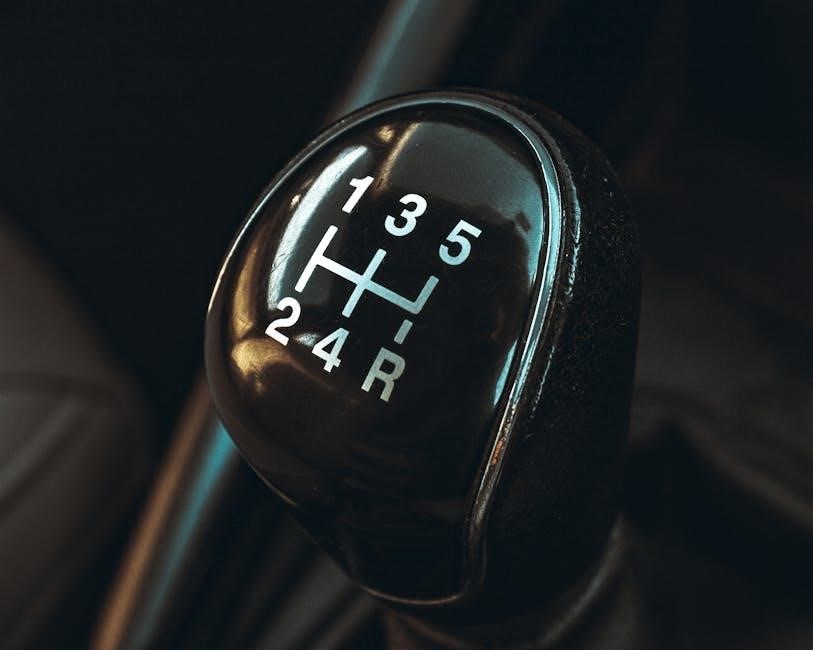
Maintenance and Fluid Checks
Regular fluid checks and timely changes are vital for a Mercedes-Benz manual transmission’s longevity. Using the correct fluid type prevents damage and ensures smooth operation.
Maintaining proper fluid levels is essential, as low levels can lead to grinding and shifting issues, potentially causing significant transmission problems.
Recommended Transmission Fluid Type
Determining the correct transmission fluid for your Mercedes-Benz manual is paramount, as using the incorrect type can lead to severe damage and performance issues. Generally, Mercedes-Benz manual transmissions require a specific GL-4 rated gear oil.
Consult your vehicle’s owner’s manual or a trusted Mercedes-Benz parts specialist to identify the precise fluid specification for your specific model and year. Different transmissions may require varying viscosities and additive packages.
Avoid using automatic transmission fluid (ATF) in a manual gearbox, as it’s formulated differently and won’t provide adequate lubrication or protection for the internal components.
Checking Transmission Fluid Level
Unlike automatic transmissions, checking the fluid level in a Mercedes-Benz manual gearbox isn’t always straightforward, often requiring specific procedures depending on the model. Typically, it involves locating the fill plug and level check plug on the transmission casing.
With the vehicle on a level surface, remove the check plug, and fluid should ideally trickle out. If no fluid appears, or it’s significantly low, topping up is necessary. Ensure the correct fluid type is used!
Always refer to your vehicle’s service manual for the precise location of the plugs and the correct procedure for your specific transmission model.
Transmission Fluid Change Intervals
Determining the correct transmission fluid change interval for your Mercedes-Benz manual is crucial for longevity. While often overlooked, fluid degrades over time, impacting performance. Generally, a change is recommended every 30,000 to 60,000 miles, but severe driving conditions necessitate more frequent changes.
Factors like frequent towing, aggressive driving, or track use can shorten the interval. Always consult your vehicle’s service manual for the manufacturer’s specific recommendations.
Regular fluid changes help maintain optimal lubrication and prevent premature wear of internal components.
Troubleshooting Transmission Issues
Diagnosing shifting problems often points to incorrect fluid levels or the notorious 13-pin connector plug O-ring, causing hard shifting or complete failure.
Electrical issues and potential sensor malfunctions should also be investigated when experiencing transmission irregularities in your Mercedes-Benz.
Diagnosing Shifting Problems
Initial diagnosis should focus on verifying the transmission fluid level and condition, as low or incorrect fluid is a frequent culprit for shifting difficulties.
Specifically, a refusal to enter gears like 5th, 6th, or reverse, coupled with a loose shifter feel, suggests internal issues or linkage problems needing inspection.
Furthermore, carefully examine the 13-pin connector plug O-ring, a common failure point in Mercedes-Benz manual transmissions, often leading to erratic shifting behavior.
Consider potential electrical faults; intermittent issues might indicate wiring harness damage or a malfunctioning speed sensor impacting transmission operation.
Identifying Potential Electrical Issues
Electrical problems can manifest as intermittent transmission issues, such as sudden jumps to neutral while driving, hinting at circuit disruptions.
A thorough inspection of the wiring harness is crucial, looking for damaged or corroded connections that could interrupt signals to the transmission.
The speed sensor plays a vital role; a faulty sensor can provide incorrect data to the ECU, leading to improper shifting or complete transmission failure.
ECU interaction must be considered, as the engine control unit manages transmission functions – diagnostic scans can reveal error codes pointing to electrical faults.
The 13-Pin Connector Plug O-Ring Issue
A common culprit behind Mercedes-Benz transmission problems is the deteriorating O-ring within the 13-pin connector plug.
This small rubber seal prevents transmission fluid leaks, and its failure can lead to low fluid levels and subsequent shifting difficulties.
Symptoms include hard shifting, refusal to enter certain gears, and even complete transmission failure, often misdiagnosed as internal damage.
Regular inspection and replacement of this O-ring during transmission service are vital preventative measures, saving potentially costly repairs.

Repairing Mercedes-Benz Manual Transmissions
Repairing these transmissions often involves clutch component replacement, synchronizer work, or even complete gear changes, demanding specialized skills and diagnostic tools.
Professional expertise is recommended for complex repairs, ensuring correct assembly and preventing further damage to the intricate gearbox system.
Replacing Clutch Components
Clutch replacement in a Mercedes-Benz manual transmission is a significant undertaking, requiring complete disassembly of the drivetrain. This process involves removing the transmission itself, accessing the pressure plate, friction disc, and throw-out bearing.
Careful inspection of the flywheel surface is critical; resurfacing or replacement may be necessary to ensure proper clutch engagement. Using a Mercedes-Benz specific clutch kit is highly recommended for optimal performance and longevity.
Proper alignment of the clutch disc during installation is paramount, often achieved with a specialized alignment tool, preventing premature wear and ensuring smooth shifting.
Synchronizer Replacement
Synchronizer replacement within a Mercedes-Benz manual transmission demands meticulous attention to detail and specialized tools. Accessing the synchronizers requires complete transmission disassembly, exposing the gearsets and shift forks.
Careful inspection of the synchronizer rings and sleeves is crucial, identifying wear or damage that causes grinding during gear changes. Using a Mercedes-Benz specific synchronizer kit ensures compatibility and proper function.
Proper lubrication during reassembly is vital, utilizing the correct transmission fluid to facilitate smooth engagement and prevent future issues; Precision and cleanliness are key to a successful repair.
Gear Replacement Procedures
Gear replacement in a Mercedes-Benz manual transmission is a complex undertaking, typically reserved for significant damage or wear. The process begins with complete transmission removal and disassembly, exposing the internal gearsets.
Careful marking of gear positions is essential for correct reassembly, ensuring proper mesh and operation. Specialized tools, like gear pullers and presses, are often required for safe removal and installation.
Thorough inspection of the associated bearings and shafts is crucial, replacing any worn components to prevent future failures. Precise torque specifications must be followed during reassembly for optimal performance.
Transmission Fluid and its Importance
Transmission fluid is vital for smooth operation; incorrect fluid or low levels cause shifting issues and potential failures in Mercedes-Benz manual transmissions.
Fluid condition directly impacts performance, and maintaining the correct level is paramount for longevity and preventing costly repairs.
Consequences of Using Incorrect Transmission Fluid
Employing the wrong transmission fluid in your Mercedes-Benz manual gearbox can trigger a cascade of detrimental effects. It compromises the synchronizer’s ability to smoothly engage gears, leading to grinding and difficulty shifting.
Incorrect fluid viscosity can also damage internal components through inadequate lubrication, accelerating wear and tear. This ultimately results in reduced transmission lifespan and potentially catastrophic failure.
Furthermore, incompatible fluids can cause corrosion and seal deterioration, leading to leaks and further compromising the system’s integrity. Always adhere to Mercedes-Benz’s specified fluid type.
Symptoms of Low Transmission Fluid
Detecting low transmission fluid early is crucial for preventing severe damage. Initial signs include difficulty shifting into any gear, accompanied by a noticeable grinding or clunking sound. A loose or spongy shifter feel is also a common indicator, suggesting reduced hydraulic pressure.
As the fluid level drops further, you might experience complete refusal to enter specific gears, like 5th, 6th, or reverse. Ignoring these symptoms can lead to costly repairs or complete transmission failure.
Regular checks are vital to maintain optimal performance and longevity.
Impact of Fluid Condition on Transmission Performance
Transmission fluid isn’t just a lubricant; it’s the lifeblood of your manual gearbox. Degraded or contaminated fluid loses its viscosity, hindering proper lubrication and cooling; This leads to increased friction, causing difficulty shifting and potential gear damage.
Old fluid also struggles to effectively operate the hydraulic systems responsible for smooth gear engagement. Consequently, you’ll notice rough shifting, slipping gears, and a generally diminished driving experience.
Maintaining fluid quality is paramount for longevity.
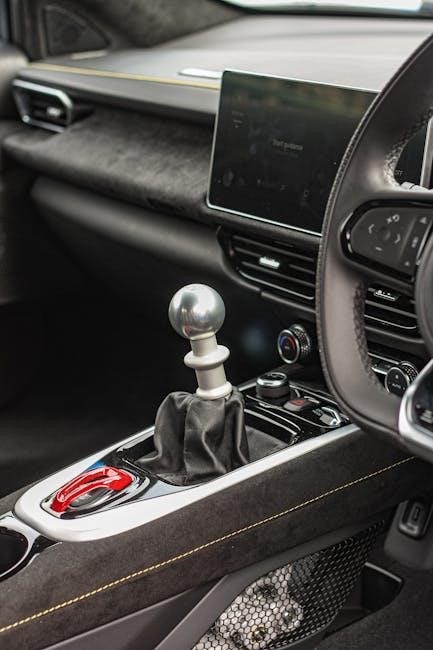
Electrical Components and Their Role
Electrical issues, like speed sensor failures or wiring harness problems, can disrupt manual transmission function. The ECU interacts with these systems, potentially causing shifting anomalies.
Problems within these circuits can manifest as erratic behavior, including the transmission unexpectedly jumping into neutral while driving.
Speed Sensor Issues
Speed sensors play a vital role in the Mercedes-Benz manual transmission system, providing crucial data to the Engine Control Unit (ECU). Malfunctioning sensors can lead to inaccurate speed readings, impacting shift timing and overall transmission performance.
Symptoms of a failing speed sensor include erratic shifting, difficulty engaging gears, or even the transmission slipping into neutral unexpectedly. These issues often stem from electrical problems within the sensor’s circuit or a physically damaged sensor itself.
Proper diagnosis requires checking the sensor’s resistance, voltage output, and wiring harness for continuity and shorts. Replacing a faulty speed sensor is often necessary to restore proper transmission function.
Wiring Harness Inspection
A thorough wiring harness inspection is critical when troubleshooting Mercedes-Benz manual transmission issues. Damage to the wiring, such as chafing, corrosion, or broken wires, can disrupt signals between the transmission, speed sensors, and the ECU.
Focus on areas prone to wear and tear, like where the harness passes near moving parts or is exposed to heat. Look for signs of damage, and use a multimeter to check for continuity and shorts in each wire.
Repairing or replacing damaged sections of the wiring harness is essential to ensure reliable transmission operation and prevent intermittent problems.
ECU (Engine Control Unit) Interaction
The ECU plays a vital role in Mercedes-Benz manual transmission function, receiving data from speed sensors and other components to optimize performance. Communication errors between the ECU and transmission can manifest as shifting problems or erratic behavior.
Diagnostic tools can reveal error codes related to ECU-transmission communication. Inspect the ECU connectors for corrosion or damage, and verify proper power and ground connections.
In some cases, ECU reprogramming or replacement may be necessary to resolve persistent transmission issues stemming from faulty ECU interaction.
Resources for Manual Transmission Parts
Finding parts requires exploring online suppliers, Mercedes-Benz dealerships, and used parts sources. Availability varies, so diligent searching is often necessary for these rarer transmissions.
Dealerships offer genuine parts, while online retailers and used parts sources can provide more affordable options, balancing cost and quality.
Online Parts Suppliers
Numerous online retailers specialize in Mercedes-Benz parts, offering a wide selection of manual transmission components. Websites like eBay Motors and specialized Mercedes-Benz parts stores frequently list gears, synchronizers, and clutch kits.
Careful vetting of suppliers is essential; check seller ratings and return policies before purchasing. Cross-referencing part numbers with Mercedes-Benz documentation ensures compatibility. Some suppliers offer detailed diagrams and exploded views to aid identification.
Consider shipping costs and potential import duties when ordering from international suppliers. Comparing prices across multiple platforms can reveal significant savings, but prioritize quality and reliability.
Mercedes-Benz Dealership Parts
Genuine Mercedes-Benz dealership parts guarantee compatibility and quality for manual transmission repairs. While typically more expensive than aftermarket options, they offer peace of mind and maintain the vehicle’s original specifications.
Dealership parts departments can directly source rare or discontinued components, utilizing Mercedes-Benz’s parts network. Expert assistance is available to identify the correct parts based on the vehicle’s VIN.
Consider exploring online parts catalogs offered by dealerships for convenience. Although pricier, using original parts minimizes the risk of fitment issues and ensures long-term reliability for your transmission.
Used Parts Availability
Sourcing used parts for Mercedes-Benz manual transmissions can be a cost-effective solution, particularly for older or rarer models. Online marketplaces and specialized salvage yards offer a wide selection of components.
However, careful inspection is crucial when purchasing used parts. Verify the part’s condition, mileage, and compatibility with your specific transmission model to avoid future issues.
Consider reputable salvage yards specializing in Mercedes-Benz vehicles for better quality control and potential warranties. Used parts offer a viable option, balancing affordability with the risk of reduced lifespan.

DIY vs. Professional Repair
DIY repairs require significant skill, while professional diagnosis offers expertise and benefits. Costs vary, with professional repairs generally being more expensive initially.
Complex issues, like synchronizer replacement, often necessitate specialized tools and knowledge best left to experienced technicians for reliable results.
Skill Level Required for DIY Repairs
Attempting Mercedes-Benz manual transmission repairs at home demands a high level of mechanical aptitude. Basic knowledge isn’t enough; you’ll need substantial experience with automotive systems and specifically, gearbox mechanics.
Successful DIY work requires familiarity with specialized tools – torque wrenches, pullers, and potentially diagnostic equipment. Clutch component replacement, for example, is physically demanding and requires precise alignment.
Furthermore, understanding potential electrical interactions and the infamous 13-pin connector O-ring issue is vital. Incorrect procedures can cause further damage, escalating repair costs significantly.
Benefits of Professional Diagnosis and Repair
Professional Mercedes-Benz technicians possess specialized knowledge and diagnostic tools to accurately pinpoint transmission issues, avoiding costly misdiagnosis. They understand the intricacies of these systems, including electrical components and fluid dynamics.
Expert repair ensures correct procedures are followed, minimizing the risk of further damage. Technicians are familiar with common problems like the 13-pin connector O-ring and can address them effectively.
Moreover, reputable shops offer warranties on their work, providing peace of mind. They can also advise on preventative maintenance, extending the transmission’s lifespan and overall vehicle reliability.
Cost Comparison: DIY vs. Professional
DIY repairs can seem cost-effective initially, but often require specialized tools and a significant time investment. Incorrect repairs can lead to further, more expensive damage, negating any savings.
Professional diagnosis typically ranges from $100-$200, while repairs vary greatly depending on the issue. Clutch replacements can cost $800-$1500+, while synchronizer replacements are similarly priced.
Considering the complexity of Mercedes-Benz manual transmissions, the risk of misdiagnosis, and potential for further damage, professional repair often proves more cost-effective in the long run.

Future of Manual Transmissions in Mercedes-Benz
Current trends favor automatic and electric vehicle technology, diminishing the likelihood of manual transmission reintroduction. However, enthusiast demand could influence future options.
Electric vehicle development significantly impacts transmission design, potentially rendering traditional manual transmissions obsolete as the automotive landscape evolves.
Current Trends in Transmission Technology
Modern automotive transmission technology is rapidly shifting towards automated systems, including advanced automatic transmissions with numerous gears and dual-clutch transmissions (DCTs) offering quicker shifts and improved efficiency.
The industry is heavily investing in electric vehicle (EV) technology, which fundamentally alters transmission requirements, often utilizing single-speed gearboxes due to the nature of electric motors.
Consequently, the demand for traditional manual transmissions is declining, and manufacturers are prioritizing development in areas aligned with electrification and autonomous driving features. This trend poses a challenge for the future of manual options.
Potential for Reintroduction of Manual Options
Despite the prevailing trend towards automation, a niche market for enthusiast drivers continues to desire the engagement of a manual transmission. Mercedes-Benz, responding to customer feedback and a resurgence of interest in driver-focused experiences, might consider limited-edition models.
However, the significant engineering and development costs associated with offering a manual option, coupled with declining overall demand, present substantial hurdles.
A reintroduction would likely focus on high-performance AMG variants, appealing to a dedicated customer base willing to embrace the traditional driving experience.
Impact of Electric Vehicles on Transmission Development
The rise of electric vehicles (EVs) fundamentally alters transmission development at Mercedes-Benz. EVs, with their single-speed gearboxes, diminish the need for complex multi-gear systems traditionally found in internal combustion engine (ICE) vehicles.
This shift redirects engineering resources towards optimizing electric drivetrains and battery technology, potentially reducing investment in manual transmission refinement.
Consequently, the future of manual transmissions within Mercedes-Benz hinges on preserving enthusiast demand amidst the accelerating transition to electric mobility and innovative powertrain solutions.