
Understanding “Misty” for Alto Saxophone
“Misty”, a jazz standard, presents unique challenges and rewards for alto saxophonists seeking readily available sheet music, often found as a PDF download.
Numerous online resources offer arrangements, including versions inspired by Eric Marienthal’s performances, catering to diverse skill levels.
Exploring these PDF options unlocks access to this beautiful melody, allowing sax players to delve into its harmonic richness and expressive potential.
Historical Context of “Misty”
“Misty,” penned by Erroll Garner in 1954, quickly ascended to become a cornerstone of the jazz repertoire, captivating audiences with its evocative melody and harmonic sophistication. Initially, the song wasn’t immediately embraced by all, but its inherent beauty gradually resonated with musicians and listeners alike. The availability of sheet music, including increasingly common PDF formats, played a crucial role in its dissemination and enduring popularity.
Paul Desmond, the alto saxophonist with the Dave Brubeck Quartet, famously popularized “Misty” with his lyrical 1955 recording. This interpretation significantly boosted the song’s profile, inspiring countless arrangements and transcriptions. The demand for accessible alto sax sheet music, often sought as PDF downloads for convenience, surged following Desmond’s success.
Over the decades, “Misty” has transcended jazz circles, appearing in film soundtracks and becoming a standard for vocalists and instrumentalists across genres. The continued availability of sheet music, now easily accessible in PDF form, ensures its legacy endures for generations of musicians.
Erroll Garner’s Original Composition
Erroll Garner’s “Misty” emerged from a unique compositional approach, characterized by his improvisational style at the piano. Garner didn’t initially write down the complete score; instead, he developed the melody and harmonic structure through performance, relying on memory and feel. This origin explains why early sheet music transcriptions varied, and why finding a definitive version can be challenging.
The song’s distinctive chord changes and lyrical melody were groundbreaking for their time, offering a fresh perspective within the jazz landscape. As demand grew, arrangements for various instruments, including the alto saxophone, were created. The rise of digital sheet music, particularly PDF formats, has made Garner’s masterpiece more accessible to saxophonists.
Many modern PDF versions aim to capture the essence of Garner’s original intent, while also providing practical arrangements for performance. These resources allow sax players to connect with the song’s emotional depth and harmonic richness.
Popularity and Influence of the Song
“Misty” quickly transcended its jazz origins, becoming a beloved standard across genres, embraced by vocalists and instrumentalists alike. Its enduring appeal stems from its evocative melody and emotionally resonant harmonies, making it a staple in countless recordings and performances. This widespread popularity fueled the demand for arrangements tailored to various instruments, including the alto saxophone.
The song’s influence extends to jazz education, frequently appearing in curricula as a valuable study piece. The availability of sheet music, especially in convenient PDF format, has democratized access to “Misty,” allowing aspiring saxophonists to learn and interpret this classic.
Performers like Eric Marienthal further cemented the song’s legacy, inspiring countless players to explore its possibilities. The proliferation of online resources offering alto sax sheet music PDF versions ensures its continued relevance for generations to come.

Finding Alto Saxophone Sheet Music for “Misty”
Alto sax sheet music PDF options for “Misty” are abundant online, ranging from free resources to professionally arranged, paid versions for dedicated players.
Digital platforms offer convenient access to various arrangements, simplifying the search for the perfect rendition.
Online Sheet Music Databases
Numerous online databases serve as excellent starting points for locating alto saxophone sheet music for “Misty” in PDF format. Websites like Musicnotes.com, SheetMusicPlus, and Virtual Sheet Music boast extensive catalogs, often featuring multiple arrangements tailored to different skill levels – from beginner-friendly simplified versions to complex charts for advanced players.
These platforms typically allow users to preview the sheet music before purchasing, ensuring it aligns with their needs. Scribd, while a subscription service, can also yield results, offering access to user-uploaded scores, including potential transcriptions and arrangements of “Misty”.
Furthermore, dedicated saxophone resource websites and forums frequently compile lists and links to free or affordable PDF sheet music. A diligent search using keywords like “Misty alto sax PDF” or “Erroll Garner Misty saxophone sheet music” will uncover a wealth of options. Remember to always verify the legality and quality of free downloads before using them.
Free vs. Paid Sheet Music Options
When seeking “Misty” alto sax sheet music in PDF format, a clear distinction exists between free and paid options. Free sheet music, often found on sites like Scribd or through online forums, can be a budget-friendly starting point, but quality varies significantly. Arrangements may be inaccurate, incomplete, or poorly formatted, potentially hindering learning.
Paid sheet music, sourced from reputable databases like Musicnotes.com or SheetMusicPlus, generally offers higher quality and accuracy. These arrangements are often professionally transcribed and edited, ensuring a reliable learning experience. They frequently include clear fingerings and dynamic markings.
While paid options require an investment, the improved clarity and accuracy can accelerate progress and prevent the frustration of deciphering flawed transcriptions. Consider the level of detail and reliability needed; for serious study, paid sheet music is often the superior choice, offering a polished and dependable resource.
PDF Format Advantages for Saxophone Music
The PDF format is exceptionally well-suited for alto saxophone sheet music, particularly for pieces like “Misty.” Its portability allows musicians to access scores on various devices – tablets, laptops, and smartphones – facilitating practice anywhere. PDFs maintain consistent formatting across platforms, ensuring the music appears as intended by the arranger, unlike some other digital formats.
Furthermore, PDFs support high-resolution printing, crucial for clear readability of complex musical notation. Saxophone music often contains intricate fingerings and dynamic markings, demanding sharp visual clarity. The ability to zoom in without pixelation is also a significant advantage.
PDFs are easily shareable with teachers or fellow musicians, fostering collaboration. They also readily accommodate annotations, allowing players to mark fingerings, phrasing, or practice notes directly onto the score, enhancing the learning process.

Key Alto Saxophonists and Their “Misty” Interpretations
Paul Desmond’s iconic rendition profoundly influenced “Misty” arrangements, inspiring countless transcriptions and sheet music versions, often available as PDF downloads.
Eric Marienthal also offers compelling interpretations, with accessible PDF arrangements catering to diverse skill levels.
These performances shape how saxophonists approach the song.
Paul Desmond’s Iconic Version
Paul Desmond, celebrated for his lyrical and understated style, delivered a definitive interpretation of “Misty” that remains a benchmark for alto saxophonists. His 1954 recording with the Dave Brubeck Quartet established the song’s enduring popularity and profoundly influenced subsequent arrangements.
Consequently, numerous transcriptions of Desmond’s solo and the complete arrangement have circulated, frequently appearing as PDF sheet music online. These versions aim to capture the nuance of his phrasing, the elegance of his melodic lines, and his distinctive tone.
Many PDF resources attempt to replicate his subtle harmonic choices and rhythmic feel, offering players a pathway to understanding and emulating his artistry. Finding accurate transcriptions is key, as the beauty of Desmond’s playing lies in its delicate details. Players seeking to learn from his approach will find a wealth of sheet music, often in PDF format, dedicated to his iconic rendition.
These resources allow saxophonists to dissect and internalize the elements that made Desmond’s “Misty” so memorable.
Kenny Dorham’s Arrangement
Kenny Dorham, a highly respected trumpeter and composer, crafted a compelling arrangement of “Misty” that offers a distinct alternative to the more commonly known versions. While often associated with alto saxophone through transcriptions, Dorham’s original work provides a fascinating harmonic and melodic landscape for saxophonists.
Although less prevalent than Desmond’s rendition, sheet music of Dorham’s arrangement, often available as a PDF, presents a more complex and bebop-influenced take on the standard. These PDF versions frequently include detailed chord changes and solo transcriptions, allowing players to explore his sophisticated harmonic concepts.
Dorham’s arrangement challenges saxophonists with its intricate lines and demanding improvisational opportunities. Finding a reliable PDF copy is crucial for accurately representing his vision. Studying his work offers a valuable insight into a different approach to “Misty,” expanding a player’s harmonic vocabulary and improvisational skills.
It’s a rewarding, though challenging, exploration for dedicated saxophonists.
Eric Marienthal’s Performance and Sheet Music Availability
Eric Marienthal, a Grammy-winning saxophonist, is renowned for his fluid technique and captivating interpretations of jazz standards, including a popular rendition of “Misty”. His performance showcases a contemporary approach, blending smooth jazz elements with the song’s inherent beauty.
Consequently, sheet music of Marienthal’s arrangement is highly sought after by alto saxophonists. Numerous sources offer transcriptions and arrangements, frequently available as a PDF download. These PDF versions often include his signature runs and stylistic nuances, providing valuable learning material.
Finding accurate PDF transcriptions is key to capturing the essence of Marienthal’s playing. Several online platforms and music retailers specialize in saxophone sheet music, offering varying levels of accuracy and detail. His version is often considered accessible yet challenging, making it ideal for intermediate to advanced players.
It’s a fantastic resource for developing a modern jazz saxophone style.

Technical Aspects of Playing “Misty” on Alto Sax
“Misty” demands breath control and precise fingering, especially when utilizing sheet music and PDF transcriptions for complex passages.
Mastering the chord changes and key signatures is crucial for a polished performance, enhancing musicality.
Smooth legato phrasing is essential.
Key Signatures and Chord Progressions
“Misty”, commonly performed in Eb major for alto saxophone, presents a moderate key signature with three flats – Bb, Eb, and Ab. However, many sheet music arrangements, particularly those available as PDF downloads, offer transpositions to accommodate different skill levels and preferences.
The song’s harmonic foundation revolves around a sophisticated chord progression, frequently employing ii-V-I movements and extended harmonies like 9ths and 13ths. These enrich the melodic line and create a lush, romantic atmosphere. Players utilizing PDF transcriptions should carefully analyze the chord voicings, paying attention to alterations and inversions.
Common chords include Ebmaj7, Fm7, Bb7, and Abmaj7, often appearing in cyclical patterns. Understanding these progressions is vital for improvisation and creating compelling solos. Accessing accurate sheet music, ideally in PDF format for easy viewing, allows saxophonists to internalize these harmonic nuances and deliver a nuanced interpretation of this timeless standard.
Tempo and Style Considerations
“Misty” traditionally lends itself to a ballad tempo, typically ranging from 60 to 80 beats per minute, fostering a romantic and introspective mood. When studying sheet music, especially PDF versions, observe tempo markings and phrasing suggestions to capture the song’s essence.
Stylistically, “Misty” thrives on rubato – a flexible tempo allowing for expressive stretching and compression of time. This nuance is crucial for conveying emotion. Many PDF transcriptions of performances, like those by Eric Marienthal, demonstrate masterful rubato application.
The song’s style blends elements of jazz and popular music, demanding a lyrical tone and smooth legato phrasing from the alto saxophonist. Careful attention to dynamics and articulation, guided by the sheet music, will elevate the performance. Utilizing a PDF allows for detailed study of these stylistic elements.

Common Challenges for Alto Sax Players
“Misty” presents several challenges for alto saxophonists, even with readily available sheet music in PDF format. The song’s wide melodic range requires strong breath control and consistent embouchure. Navigating the chord changes, particularly the frequent use of seventh and ninth chords, demands harmonic awareness.
Maintaining a smooth legato throughout the piece can be difficult, especially during faster passages. Players often struggle with accurately executing the chromaticism and subtle melodic nuances present in the sheet music.
Successfully interpreting “Misty” requires careful attention to phrasing and dynamics, often showcased in detailed PDF transcriptions of artists like Eric Marienthal. Mastering these elements transforms a technically proficient performance into a truly expressive one.

Resources for Learning “Misty”
Sheet music in PDF format, alongside play-along tracks, and vibrant saxophone forums, provide invaluable tools for mastering “Misty” on the alto sax.
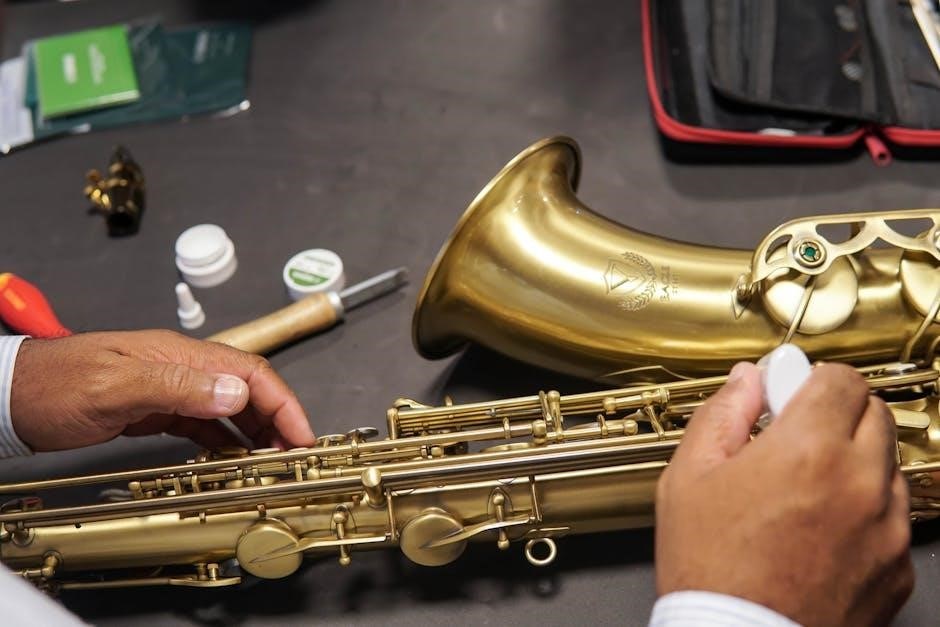
These resources facilitate learning and refinement of this iconic jazz standard.

Sheet Music with Fingering Charts
Sheet music for “Misty”, specifically tailored for alto saxophone and presented in PDF format, often incorporates helpful fingering charts to assist players of all levels.
These charts visually map the complex fingerings required for the song’s nuanced melodies and challenging intervals, making it easier to navigate the instrument’s range.
Beginners especially benefit from these visual aids, accelerating their learning process and building confidence. More advanced players can utilize them to quickly reference alternative fingerings for smoother transitions or stylistic variations.
Many PDF versions available online include detailed fingering charts directly on the sheet music, or as a separate accompanying document. Some resources even offer color-coded charts for enhanced clarity.
Searching for “Misty alto sax PDF with fingering charts” will yield numerous options, ranging from free downloads to professionally arranged, paid versions. These resources are invaluable for unlocking the full potential of this beautiful jazz standard.
Play-Along Tracks and Tutorials
Complementing alto saxophone sheet music in PDF format for “Misty,” numerous play-along tracks and instructional tutorials are readily available online, enhancing the learning experience.
These resources allow saxophonists to practice with a backing band, developing their timing, intonation, and improvisational skills. Many tutorials break down the song into manageable sections, offering detailed explanations of phrasing, articulation, and technique.
YouTube is a treasure trove of “Misty” alto sax tutorials, featuring performances and lessons from experienced players. Websites specializing in jazz education also provide high-quality play-along tracks at various tempos.
Combining PDF sheet music with these interactive tools creates a comprehensive learning environment. Players can follow the notation while simultaneously hearing the correct harmonies and rhythms, solidifying their understanding.
Searching for “Misty alto sax play-along” or “Misty sax tutorial” will reveal a wealth of options to support your musical journey;
Saxophone Forums and Communities
Beyond accessing alto saxophone sheet music in PDF format for “Misty,” engaging with online saxophone forums and communities provides invaluable support and shared knowledge.
These platforms connect players of all levels, fostering a collaborative environment where questions can be asked, interpretations discussed, and resources exchanged. Members often share their own arrangements, transcriptions, and tips for tackling challenging passages.
Discussions surrounding “Misty” frequently appear, with users offering advice on fingering, tone production, and stylistic nuances. Finding reliable PDF sources is also a common topic, with recommendations and warnings shared.
Participating in these communities allows you to learn from experienced saxophonists, receive constructive criticism, and discover new approaches to the song.
Websites like Sax on the Web and dedicated Facebook groups offer vibrant spaces for connection and musical growth, supplementing your PDF sheet music study.

Advanced Techniques for “Misty” Arrangements
PDF sheet music unlocks opportunities for reharmonization, improvisation, and stylistic exploration, allowing alto saxophonists to personalize “Misty” with advanced techniques.
Experimenting with harmonic variations and soloing elevates performances beyond the standard arrangement, showcasing individual artistry.
Improvisation and Soloing

“Misty”, when approached with a PDF of the sheet music, provides a fantastic foundation for alto saxophone improvisation and soloing. The song’s chord progression, while beautiful, isn’t overly complex, offering ample space for creative melodic development.
Players can begin by outlining the chord changes, using arpeggios and scales related to each chord. Focusing on the song’s inherent melancholic mood is crucial; incorporating bluesy bends and subtle vibrato can enhance the emotional impact.
Analyzing solos by masters like Paul Desmond (whose interpretations are often transcribed and available as PDFs) can provide valuable insights into phrasing and melodic ideas. Don’t be afraid to experiment with altered scales and passing tones to add color and sophistication.
Remember to build solos dynamically, creating tension and release. Utilizing call-and-response phrases, and incorporating rhythmic variations, will keep the listener engaged. The PDF sheet music serves as a guide, but the true artistry lies in personal expression and spontaneous creativity.
Harmonic Variations and Reharmonization
Exploring “Misty” through a PDF of the alto saxophone sheet music opens doors to fascinating harmonic variations and reharmonization possibilities. While the original chord progression is elegant, substituting chords with altered voicings can add depth and complexity.
Consider employing tritone substitutions, adding seventh or ninth chords to existing harmonies, or borrowing chords from parallel keys. A PDF allows for easy annotation, marking potential changes directly onto the score for experimentation.
Analyzing arrangements by artists like Kenny Dorham, often available in transcribed PDF format, reveals sophisticated harmonic approaches. Experimenting with passing chords and secondary dominants can create smoother transitions and unexpected harmonic colors.
Remember that reharmonization should serve the melody, enhancing its emotional impact rather than overshadowing it. Subtle changes can be incredibly effective, adding a personal touch to this timeless standard. The PDF becomes a canvas for harmonic exploration and creative interpretation.
Exploring Different Interpretations and Styles
Accessing “Misty” alto sax sheet music in PDF format unlocks a world of interpretive possibilities beyond the standard jazz ballad. Studying performances by Paul Desmond, whose iconic version is widely available, provides a foundation, but don’t limit yourself.
Consider exploring Latin jazz interpretations, adding a bossa nova or samba feel. A PDF allows for easy adaptation, marking rhythmic changes and altered phrasing. Alternatively, experiment with a more contemporary, smooth jazz style, incorporating modern harmonies and improvisation techniques.
Transcriptions of Eric Marienthal’s playing, often found as PDFs, demonstrate a more energetic and technically demanding approach. The PDF sheet music serves as a springboard for personal expression, encouraging you to blend styles and create a unique rendition.
Ultimately, the goal is to internalize the melody and harmonic structure, then express it through your own musical voice, guided by the flexibility a PDF provides.