Article Plan: Spanish Language Learning Books PDF Free Download (as of 02/18/2026 09:31:34)
Today’s date is 02/18/2026 09:31:34. This article details freely available Spanish learning resources, specifically PDF books, covering grammar, vocabulary, and regional variations.
Embarking on a Spanish language journey doesn’t require expensive courses or textbooks. A wealth of free resources exists online, particularly in the form of downloadable PDF books. These resources cater to all levels, from complete beginners to advanced learners seeking to refine their skills. The accessibility of these PDFs makes language learning incredibly convenient and cost-effective.
This article focuses on locating and utilizing these free Spanish learning materials. We’ll explore various platforms, including the Internet Archive and Studyebooks.com, highlighting specific titles like “Spanish for Everyone” and “Simple Spanish in A Week.” Understanding the nuances of Spanish, including pronoun variations and verb conjugations, is crucial, and these PDFs offer comprehensive coverage.
Furthermore, we’ll discuss how to effectively integrate these resources into a broader learning strategy, alongside legal considerations for downloading and utilizing free content. Prepare to empower your Spanish learning journey with these readily available, valuable tools!
Why Use PDF Books for Spanish Learning?
PDF books offer unparalleled convenience for Spanish learners. They are easily downloadable, portable across devices – smartphones, tablets, computers – and require no internet connection once saved. This accessibility allows for learning on-the-go, during commutes, or in areas with limited connectivity. Unlike physical books, PDFs are often searchable, enabling quick access to specific grammar points or vocabulary.
Many free Spanish PDFs are scans of classic textbooks and handbooks, providing a wealth of traditional learning materials. These resources often include comprehensive grammar explanations, verb conjugations, and extensive vocabulary lists. The format also supports interactive features like embedded audio links (though availability varies).
Moreover, PDFs are environmentally friendly and cost nothing, making language learning more sustainable and accessible to everyone. They represent a fantastic starting point or supplementary resource for any Spanish language learner.
Popular Platforms for Downloading Free Spanish PDFs
Several online platforms specialize in providing free PDF books, including a significant collection of Spanish learning materials. Internet Archive stands out as a primary resource, offering a vast digital library with countless scanned books and documents, including classic Spanish textbooks and public domain handbooks. Studyebooks.com is another valuable platform, focusing on older, often foundational texts for language acquisition.
These platforms generally operate on a borrow-and-download model, allowing users to access materials without cost. However, availability can fluctuate, and it’s essential to verify the legitimacy of downloads. Other websites occasionally offer free Spanish PDFs, but caution is advised regarding copyright and potential malware.
Always prioritize reputable sources like Internet Archive and Studyebooks.com for a safe and reliable learning experience.
Internet Archive: A Treasure Trove of Spanish Books
The Internet Archive is an exceptional resource for learners seeking free Spanish learning materials in PDF format. It hosts a diverse collection, including “Spanish for Everyone,” a comprehensive resource covering grammar, verb tables, and vocabulary – a true “three books in one” compilation. The archive’s strength lies in its extensive catalog of public domain Spanish handbooks, offering access to classic texts previously unavailable or costly to acquire.
Users can freely download, borrow, and stream these materials, making it an ideal platform for self-directed study. The archive’s unique identifiers (like urn:lcp and urn:oclc) ensure accurate tracking and access to specific editions. It’s a digital haven for both beginners and advanced learners.
“Spanish for Everyone” ⎼ A Comprehensive Resource
“Spanish for Everyone,” available on the Internet Archive, truly lives up to its name. This resource, presented as a combined volume, meticulously covers essential aspects of the Spanish language. Learners benefit from a complete grammar section, detailed verb tables for conjugation practice, and an extensive vocabulary list to build fluency. The book aims to empower individuals, “regardless of age or ability,” to confidently speak and read Spanish.
Its comprehensive nature makes it suitable for various learning styles. The inclusion of an index facilitates easy navigation and targeted study. The book’s cover promises a pathway to Spanish proficiency, and its digital availability ensures accessibility for learners worldwide.
Public Domain Spanish Handbooks on Internet Archive
The Internet Archive hosts a valuable collection of public domain Spanish handbooks, offering learners access to classic texts without cost. Among these is “A Reform Spanish Handbook” by Arthur Cozens Elliott, a 3.9 MB PDF providing a structured approach to the language. Complementing this is “Beginning Spanish, Training for Reading” by Colley F. Sparkman and Carlos Castillo, a more extensive 8.4 MB resource.
These handbooks represent a historical perspective on Spanish language instruction. They provide a foundation in grammar and reading comprehension, ideal for self-directed study. The availability of these materials in PDF format ensures preservation and widespread access, benefiting anyone seeking to learn Spanish through traditional methods.
Studyebooks.com: Accessing Classic Spanish Texts
Studyebooks.com serves as another excellent portal for downloading free Spanish learning materials, particularly classic texts now in the public domain. The platform offers a curated selection of scanned books, readily available in PDF format for immediate access. Notable resources include “A Reform Spanish Handbook” by Elliott, a concise guide to Spanish grammar and usage, weighing in at 3.9 MB.
Alongside Elliott’s handbook, learners can find “Beginning Spanish, Training for Reading” by Sparkman & Castillo, a more comprehensive 8.4 MB resource focused on developing reading skills. These texts provide a glimpse into historical language instruction, offering a unique perspective alongside modern learning methods.
“A Reform Spanish Handbook” by Elliott
“A Reform Spanish Handbook” by Arthur Cozens Elliott, available via Studyebooks.com, presents a concise and structured approach to learning Spanish. This public domain resource, weighing 3.9 MB, focuses on streamlining the learning process by presenting core grammatical concepts in a clear and accessible manner. It’s particularly valuable for learners seeking a foundational understanding of Spanish sentence structure and verb conjugations.
Elliott’s handbook likely reflects the pedagogical approaches of its time, offering a traditional yet effective method for building language proficiency. While potentially lacking the interactive elements of modern textbooks, its focused content makes it a useful supplement to contemporary learning resources. It’s a solid choice for those desiring a classic, grammar-centric approach.
“Beginning Spanish, Training for Reading” by Sparkman & Castillo
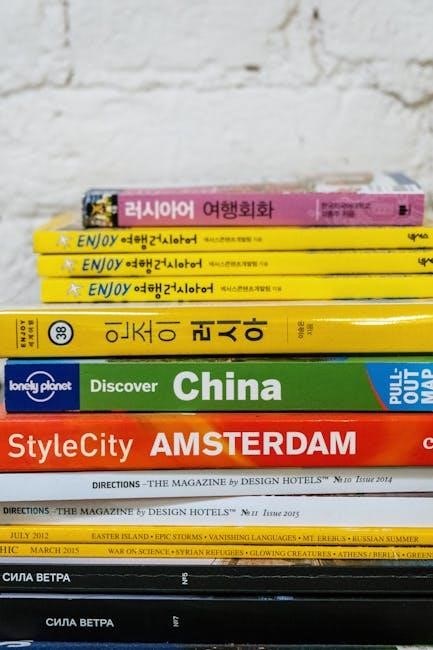
“Beginning Spanish, Training for Reading” by Colley F. Sparkman and Carlos Castillo, accessible through Studyebooks.com, is an 8.4 MB PDF designed to rapidly develop reading skills in Spanish. Unlike courses prioritizing conversational fluency, this handbook emphasizes decoding written Spanish, building a strong foundation in grammar and vocabulary specifically for comprehension.
This resource likely employs a systematic approach, introducing grammatical structures and vocabulary within the context of reading passages. It’s ideal for learners who prefer a text-based learning style or those needing to quickly acquire reading proficiency for academic or professional purposes. The focus on “training for reading” suggests a deliberate methodology for improving comprehension speed and accuracy.
Other Websites Offering Free Spanish PDFs
Beyond the Internet Archive and Studyebooks.com, numerous websites provide access to free Spanish learning PDFs, though quality and legality can vary. Many language exchange platforms and online learning communities curate lists of downloadable resources, often including textbooks, workbooks, and supplementary materials.
Caution is advised when downloading from less-established sites; always verify the source and scan files for malware. Websites specializing in open educational resources (OER) are generally reliable. Searching for specific textbook titles alongside “PDF download” can sometimes yield results, but respect copyright laws. Remember to prioritize resources offering clear explanations and accurate content for effective learning.
Beginner-Level Spanish Books in PDF Format
For those starting their Spanish journey, several PDF books cater specifically to beginners. “Simple Spanish in A Week” by Pawankumar offers a condensed introduction, focusing on rapid vocabulary acquisition and fundamental grammar concepts. These resources typically prioritize practical phrases for everyday conversations, enabling learners to quickly build a basic communicative skillset.
Beginner books emphasize core vocabulary – greetings, numbers, colors, and essential verbs – alongside simplified grammatical explanations. Look for PDFs with accompanying audio files to improve pronunciation. Many beginner resources incorporate interactive exercises and quizzes to reinforce learning. Consistent practice with these materials is crucial for establishing a solid foundation in Spanish.
“Simple Spanish in A Week” by Pawankumar
“Simple Spanish in A Week” by Pawankumar, available as a free PDF download, presents a concentrated approach to initiating Spanish language acquisition. This resource, categorized under multilingualism, aims to provide learners with a foundational grasp of the language within a short timeframe. It’s designed for individuals seeking a quick start, prioritizing practical vocabulary and essential grammatical structures.

The book’s format facilitates self-paced learning, making it accessible to a wide range of learners. While it may not offer the depth of more comprehensive textbooks, it serves as an excellent introductory tool. Learners can expect a focus on commonly used phrases and basic sentence construction, ideal for building initial confidence and conversational ability. It’s a good starting point before delving into more complex materials.
Focus on Everyday Vocabulary and Grammar
Many free Spanish PDF books prioritize practical, everyday vocabulary and grammar, recognizing that learners often need immediate communicative skills. These resources move beyond abstract concepts, concentrating on words and phrases used in common daily interactions – greetings, ordering food, asking for directions, and basic descriptions. This approach fosters quicker comprehension and encourages early conversational practice.
Grammar instruction within these PDFs typically focuses on core structures essential for forming simple sentences. Verb conjugations in the present tense, basic sentence order, and common prepositions are frequently emphasized. The goal isn’t exhaustive grammatical mastery, but rather building a functional base for understanding and producing basic Spanish. This targeted approach accelerates the learning process and boosts learner confidence.
Intermediate Spanish Books Available as Free PDFs
While fewer in number than beginner resources, intermediate-level Spanish books in PDF format are accessible online, offering a bridge to more complex language structures. These materials typically assume a foundational understanding of basic grammar and vocabulary, building upon that base with more nuanced concepts. Expect to encounter more sophisticated verb tenses – past tenses like the preterite and imperfect – and a wider range of subjunctive moods.
Intermediate PDFs often incorporate authentic materials, such as short stories, articles, or excerpts from novels, to expose learners to real-world Spanish usage. These texts challenge readers to apply their knowledge in context, improving comprehension and expanding vocabulary. Focus shifts towards understanding idiomatic expressions and navigating more complex sentence structures, preparing learners for advanced study.
Advanced Spanish Literature in PDF Format
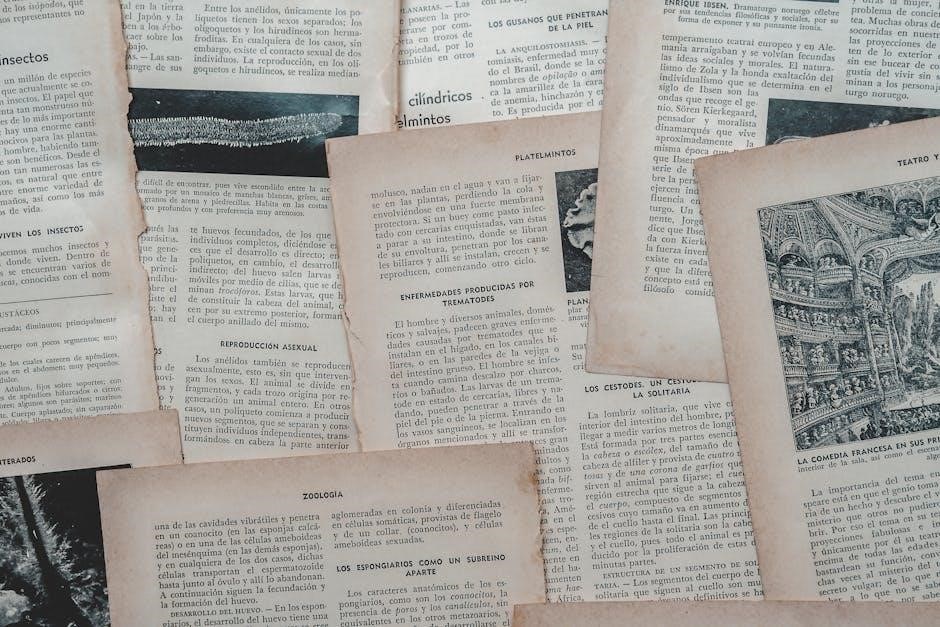
For advanced learners seeking immersion, accessing classic Spanish literature in PDF format provides invaluable practice. Resources like the Internet Archive offer public domain works from renowned Spanish and Latin American authors. These texts present complex grammatical structures, extensive vocabulary, and culturally rich narratives, demanding a high level of proficiency.
Reading advanced literature enhances comprehension skills, exposes learners to diverse writing styles, and deepens cultural understanding. Expect challenging sentence constructions, subtle nuances in meaning, and literary devices requiring careful analysis. Utilizing dictionaries and online resources becomes crucial for navigating unfamiliar vocabulary and grasping complex themes. This level focuses on appreciating the artistry of the Spanish language.
Understanding Spanish Grammar Through PDF Resources
Numerous PDF books specifically target Spanish grammar, offering structured explanations and practical exercises. Resources like “Spanish for Everyone” (available on Internet Archive) combine grammar rules with verb tables and vocabulary, providing a comprehensive foundation. Classic handbooks, often found in the public domain, detail conjugation patterns, sentence structure, and the nuances of Spanish syntax.
These resources often break down complex concepts into manageable segments, facilitating gradual understanding. Look for PDFs with clear examples, practice drills, and answer keys for self-assessment. Focusing on grammar through dedicated materials builds a solid base for both speaking and writing, improving overall fluency and accuracy. Consistent practice is key to mastering grammatical concepts.
Spanish Pronouns and Regional Variations (Latin America vs. Spain)
Spanish pronoun usage significantly differs between Latin America and Spain, a crucial aspect for learners. PDF resources often highlight these variations, explaining the standard Latin American “tú” versus the Spanish “vosotros.” Understanding “vosotros” is essential for communicating with speakers from Spain, as it’s the informal plural “you.”
Furthermore, the phenomenon of “voseo” – using “vos” instead of “tú” – is prevalent in the Southern Cone (Argentina, Uruguay, Paraguay) and parts of Central America. PDF books dedicated to regional dialects can clarify these nuances. Recognizing these differences prevents miscommunication and demonstrates cultural sensitivity. Mastering pronoun usage enhances conversational fluency and comprehension.

The Use of “Vosotros” in Spain
In Spain, “vosotros” serves as the informal, second-person plural pronoun – equivalent to “you all” or “y’all” when addressing a group informally. Many Spanish learning PDFs geared towards European Spanish dedicate sections to its conjugation and usage. Unlike Latin America, where “ustedes” fulfills this role universally, “vosotros” is commonplace in everyday conversation within Spain.
PDF resources often provide conjugation charts specifically for “vosotros,” detailing verb endings that differ from those of “ustedes.” Learners should practice recognizing and using “vosotros” to avoid sounding unnatural when interacting with Spanish speakers. Ignoring this pronoun can lead to misunderstandings or perceived formality in informal settings. Mastering “vosotros” is key to authentic communication.
“Voseo” in the Southern Cone (Argentina, Uruguay, Paraguay)
“Voseo,” prevalent in Argentina, Uruguay, Paraguay, and parts of Central America, presents a unique challenge for Spanish learners. It involves using “vos” instead of “tú” as the informal singular “you.” This isn’t merely a pronoun swap; it necessitates different verb conjugations, often diverging significantly from standard Spanish forms. Many free PDF Spanish learning books focusing on Latin American Spanish address this phenomenon.
PDF resources dedicated to “voseo” will illustrate these altered verb endings and provide examples of its usage in everyday conversation. Learners must understand that using “tú” in regions practicing “voseo” can sound overly formal or even incorrect. Recognizing and employing “vos” demonstrates respect and cultural awareness. Mastering “voseo” unlocks deeper comprehension of regional dialects.
Free PDF Resources for Spanish Verb Conjugation
Spanish verb conjugation is notoriously complex, making dedicated PDF resources invaluable. Numerous websites offer downloadable charts and workbooks focusing specifically on verb tenses and irregular verbs. These PDFs often categorize verbs by their ending (-ar, -er, -ir) and provide comprehensive conjugation tables for each tense – present, past, future, conditional, and subjunctive.
Look for resources that include practice exercises to reinforce learning. Some PDFs concentrate on the most frequently used verbs, while others offer a more exhaustive approach. Utilizing these free materials alongside a comprehensive Spanish textbook can significantly accelerate your understanding of verb forms. Consistent practice with these PDFs is key to mastering Spanish verb conjugation.
Building Spanish Vocabulary with PDF Workbooks
Expanding your Spanish vocabulary is crucial for fluency, and free PDF workbooks offer a convenient solution. These resources typically organize vocabulary thematically – for example, food, travel, family, or work – allowing focused learning. Many workbooks include exercises like fill-in-the-blanks, matching, and translation to actively engage with new words.
Seek out PDFs that provide context for vocabulary, such as example sentences, to understand usage. Some workbooks also incorporate images to aid memorization. Regularly working through these PDFs, even for short periods, can dramatically increase your Spanish lexicon. Combining vocabulary workbooks with reading Spanish texts further solidifies your understanding and retention of new words.
Spanish Language Learning Books Focusing on Conversation
Developing conversational skills requires practice, and certain PDF books prioritize this aspect of language learning. These resources often feature dialogues representing real-life scenarios – ordering food, asking for directions, or making introductions. Look for PDFs that include audio components, if available, to improve pronunciation and listening comprehension alongside reading.
Effective conversational books will also provide exercises prompting you to create your own dialogues or respond to prompts. Pay attention to colloquialisms and common phrases used in everyday Spanish. Supplementing these PDFs with language exchange partners or online conversation groups will accelerate your progress. Remember, consistent practice is key to becoming comfortable speaking Spanish.
Utilizing PDF Books for Spanish Reading Comprehension
PDF books are excellent tools for enhancing Spanish reading comprehension. Start with texts aligned with your current skill level – beginner, intermediate, or advanced – to avoid frustration. Actively engage with the material by highlighting unfamiliar words and phrases, then looking up their definitions. Don’t just passively read; try summarizing each paragraph or chapter in your own words.
Gradually increase the complexity of the texts you choose. Classic Spanish literature available as free PDFs provides rich vocabulary and grammatical structures. Consider re-reading passages multiple times to solidify understanding. Utilize online resources to find comprehension questions or exercises related to specific books. Consistent reading practice will significantly improve fluency and comprehension.
Tips for Effectively Using Spanish PDF Books
To maximize your learning, annotate PDF books directly using available tools – highlight key vocabulary, underline important grammar points, and add personal notes. Convert PDFs to text for easier copying and pasting into flashcard apps or spaced repetition systems. Regularly review highlighted sections and notes to reinforce learning.
Don’t be afraid to slow down and look up unfamiliar words; building vocabulary is crucial. Combine PDF study with audio resources to improve pronunciation and listening comprehension. Utilize the search function within the PDF to quickly locate specific terms or concepts. Consistent, focused study sessions are more effective than infrequent, lengthy ones.
Combining PDF Books with Other Learning Methods
PDF books form a strong foundation, but integrate them with diverse methods for optimal results. Supplement reading with language exchange partners for conversational practice, focusing on applying newly learned grammar and vocabulary. Utilize language learning apps like Duolingo or Babbel to reinforce concepts and track progress.
Watch Spanish-language films and TV shows with subtitles, gradually reducing reliance on them as comprehension improves. Listen to Spanish music and podcasts during commutes or downtime for passive immersion. Consider online Spanish courses for structured learning and personalized feedback. Remember, a multifaceted approach accelerates fluency and enhances retention, making learning enjoyable.
Legal Considerations When Downloading Free PDFs
Downloading free PDFs requires careful attention to copyright laws. Prioritize resources from reputable sources like the Internet Archive, ensuring materials are in the public domain or offered with appropriate licenses. Avoid websites offering copyrighted textbooks or materials without explicit permission from the rights holders.
Be cautious of sites with unclear terms of service or those promoting illegal downloads. Supporting authors and publishers by purchasing legitimate copies when possible is ethically responsible. Always verify the source’s legitimacy before downloading to protect yourself from malware or legal repercussions. Respecting intellectual property rights fosters a sustainable ecosystem for language learning resources.
“Learning Spanish How to Understand and Speak a New Language” ⎼ A Detailed Look
Available on the Internet Archive, “Learning Spanish How to Understand and Speak a New Language” presents a comprehensive approach to language acquisition. This resource, offered as a free PDF, likely focuses on foundational elements crucial for beginners. Expect detailed explanations of grammar, pronunciation guidance, and practical vocabulary building exercises.
The book’s title suggests an emphasis on not just memorization, but genuine comprehension and conversational ability. It probably includes dialogues and scenarios to simulate real-life interactions. Examining the table of contents (if available on the Archive) will reveal the specific topics covered and the book’s overall structure. It’s a valuable addition to any self-study Spanish curriculum.
Finding Spanish PDFs for Specific Dialects
Spanish exhibits significant dialectal variation, particularly between Latin America and Spain. Locating PDFs tailored to your desired dialect requires focused searching. While general resources are plentiful, pinpointing materials reflecting specific regional nuances can be challenging.
Consider keywords like “Spanish from Argentina PDF,” or “Castilian Spanish grammar PDF” when searching. The Internet Archive and Studyebooks.com might contain older textbooks originating from specific countries. Be aware that the use of “vosotros” is prevalent in Spain, while “voseo” dominates in parts of South America. Resources explicitly addressing these differences are invaluable.
Look for materials created by native speakers from your target region for authentic language exposure.
Resources for Spanish Pronunciation Practice (Complementary to PDF Books)
While PDF books excel at grammar and vocabulary, pronunciation demands auditory learning. Supplement your reading with dedicated pronunciation resources for optimal progress. Forvo, a website featuring native speaker pronunciations of words, is incredibly useful. YouTube channels dedicated to Spanish pronunciation offer visual and auditory guidance.
SpanishDict provides audio pronunciations alongside dictionary definitions. Consider language exchange partners for real-time practice and feedback. Pay attention to regional variations; pronunciation differs significantly between Spain and Latin America.
Focus on minimal pairs – words differing by only one sound – to refine your ear and articulation. Consistent practice, alongside PDF study, will yield noticeable improvements.
Troubleshooting Common Issues with PDF Downloads
Downloading free Spanish PDF books can sometimes present challenges. Common issues include corrupted files, slow download speeds, and compatibility problems. Ensure your PDF reader (Adobe Acrobat Reader is recommended) is up-to-date. If a file appears corrupted, try re-downloading it from a different mirror or source.
Slow download speeds often indicate network congestion; try downloading during off-peak hours. Compatibility issues may arise with older PDF readers; updating resolves this. Security warnings can occur; verify the source before enabling access.
If problems persist, clear your browser’s cache and cookies. Consider using a download manager for more reliable downloads.
The Future of Free Spanish Learning Resources Online
The landscape of free Spanish learning resources is poised for continued expansion. We anticipate increased availability of open educational resources (OER), driven by collaborative projects and institutions sharing materials. Expect more interactive PDFs incorporating multimedia elements like audio pronunciations and embedded quizzes.
Artificial intelligence (AI) will likely play a larger role, potentially offering personalized learning paths based on PDF content. Blockchain technology could ensure the authenticity and provenance of free educational materials.
Greater emphasis on dialect-specific resources, catering to learners interested in Latin American or Peninsular Spanish, is also probable. The continued growth of platforms like Internet Archive and Studyebooks.com will be crucial.
Free Spanish learning PDFs represent a powerful and accessible pathway to language acquisition. Resources like those found on Internet Archive and Studyebooks.com offer a wealth of materials, from comprehensive grammars like “Spanish for Everyone” to classic texts and focused workbooks like “Simple Spanish in A Week”.
By strategically combining these PDFs with other learning methods – language exchange partners, online courses, and immersion – learners can significantly accelerate their progress. Remember to consider regional variations, such as vosotros and voseo, when selecting resources.
Embrace the abundance of free materials and embark on a rewarding Spanish learning adventure!